What Is Whisper AI?
Whisper AI is an automatic speech recognition model from OpenAI.
It converts spoken audio into text, supports multilingual transcription, and can translate many spoken languages into English. It is commonly used for podcasts, meetings, interviews, subtitles, voice notes, and developer transcription workflows.
Model Overview
| Item | Details |
|---|---|
| Model name | Whisper AI / OpenAI Whisper |
| Developer | OpenAI |
| Model type | Automatic speech recognition and speech translation model |
| Main use | Speech-to-text transcription |
| Release | Original Whisper models were released in September 2022 |
| Architecture | Encoder-decoder Transformer |
| Training data | 680,000 hours of multilingual and multitask supervised audio data |
| Open source | Yes, inference code and model weights are available |
| License | MIT license |
| API model | whisper-1 |
| API price | $0.006 per minute for whisper-1 |
| Input | Audio files |
| Output | Text transcript or English translation |
| Best for | Transcription, subtitles, meeting notes, podcast processing, multilingual audio |
| Not ideal for | Real-time streaming with whisper-1, speaker diarization, high-risk decisions without human review |
How To Use Online Demo
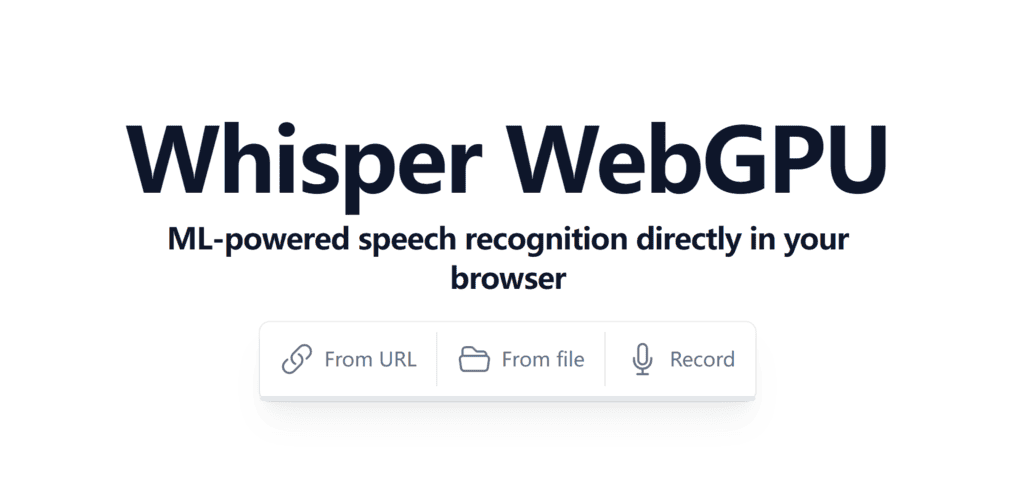
You can try it out on our Demo page.
Step 1:Upload File
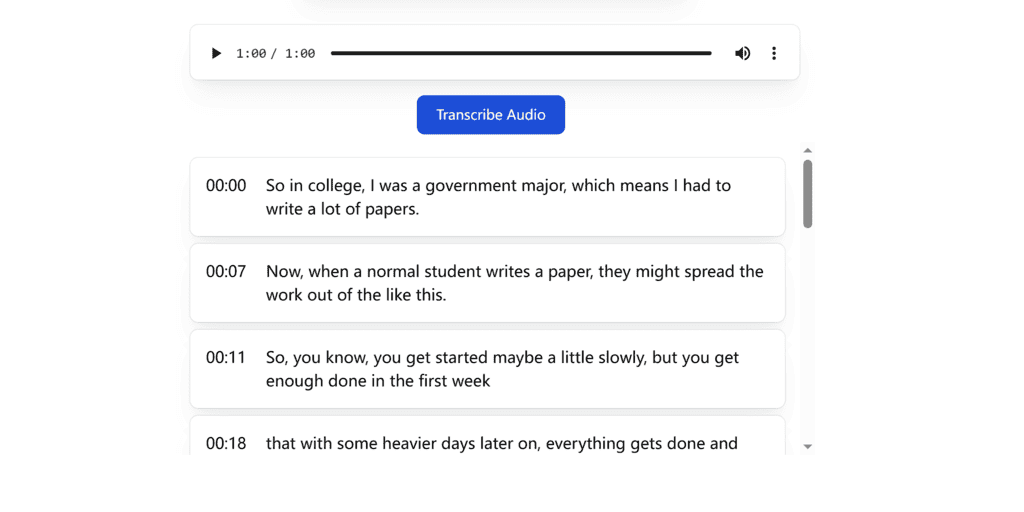
Step 2:Get Result
Features
Speech-to-Text Transcription
Whisper AI turns spoken audio into written text.
It is useful for converting meetings, podcasts, lectures, interviews, and voice recordings into readable transcripts.
Multilingual Recognition
Whisper was trained on diverse multilingual audio data.
It can handle multiple languages, accents, noisy recordings, and technical terms better than many narrow speech recognition systems.
Translation to English
Whisper can translate spoken audio from other languages into English text.
This makes it useful for multilingual content workflows, research, media localization, and global customer support.
Open-Source Deployment
The open-source Whisper models can be self-hosted.
This is useful when developers want more control over infrastructure, privacy, cost, or offline processing.
API Access
OpenAI also provides Whisper through the whisper-1 API model.
This is easier than self-hosting because developers can send audio files to the API and receive transcripts without managing GPU infrastructure.
Multiple Model Sizes
Whisper includes different model sizes such as tiny, base, small, medium, large, and turbo.
Smaller models are faster and cheaper to run locally, while larger models usually provide better transcription quality.
Prompt-Based Transcript Control
The API supports prompts that can help guide spelling, punctuation, style, or context.
This is useful for names, acronyms, product terms, and domain-specific vocabulary.
FAQ
Is Whisper AI free?
The open-source Whisper models are free to use and self-host.
If you use OpenAI’s managed API, whisper-1 is priced at $0.006 per minute.
Is Whisper AI open source?
Yes. OpenAI released Whisper’s model weights and inference code.
Developers can run it locally, modify workflows, or build transcription tools around it.
What is Whisper AI used for?
Whisper AI is used for speech-to-text transcription, subtitle generation, podcast transcripts, meeting notes, lecture transcripts, voice note processing, and multilingual translation into English.
Does Whisper AI support real-time transcription?
The classic whisper-1 API does not support real-time streaming.
For live speech-to-text, developers should check OpenAI’s newer real-time transcription models instead.
Can Whisper AI handle large audio files?
For legacy whisper-1 API uploads, OpenAI notes a 25 MiB maximum request size.
Long recordings usually need to be compressed, split into smaller segments, or processed with a custom pipeline.
Can Whisper AI transcribe audio from a URL?
No. The OpenAI Audio API requires users to upload an audio file in a supported format.
It does not accept a direct link as the audio input.
Is Whisper AI accurate?
Whisper is known for strong robustness across accents, background noise, and technical language.
However, it can still make mistakes and may occasionally generate text that was not actually spoken, so important transcripts should be reviewed by a human.
Does Whisper AI identify speakers?
Whisper is not mainly designed for speaker diarization.
If you need speaker labels, you may need another diarization model or a transcription service that adds speaker separation on top of Whisper.
Should I use the API or self-host Whisper?
Use the API if you want fast integration and do not want to manage infrastructure.
Self-host Whisper if you need local processing, more control, or lower cost at high volume, but expect more setup and hardware requirements.